Flat Concrete Roof Waterproofing in Kenya: Torch-On Membrane vs Liquid Acrylic
Direct Answer / Key Takeaway: In Kenya, flat concrete slab roofs require robust waterproofing to prevent structural water ingress and ceiling collapse. 4mm APP (Atactic Polypropylene) Torch-On Bituminous Membrane (KES 1,400 – KES 2,200/m²) is the gold standard for roofs subject to continuous ponding water, offering a 15–20 year lifespan. Fiber-Reinforced Liquid Polyurethane / Acrylic Systems (KES 950 – KES 1,600/m²) are ideal for slopes with good drainage and complex geometric parapets, forming a 100% seamless, UV-reflective elastic membrane.
Why Flat Concrete Roofs Leak in Kenya
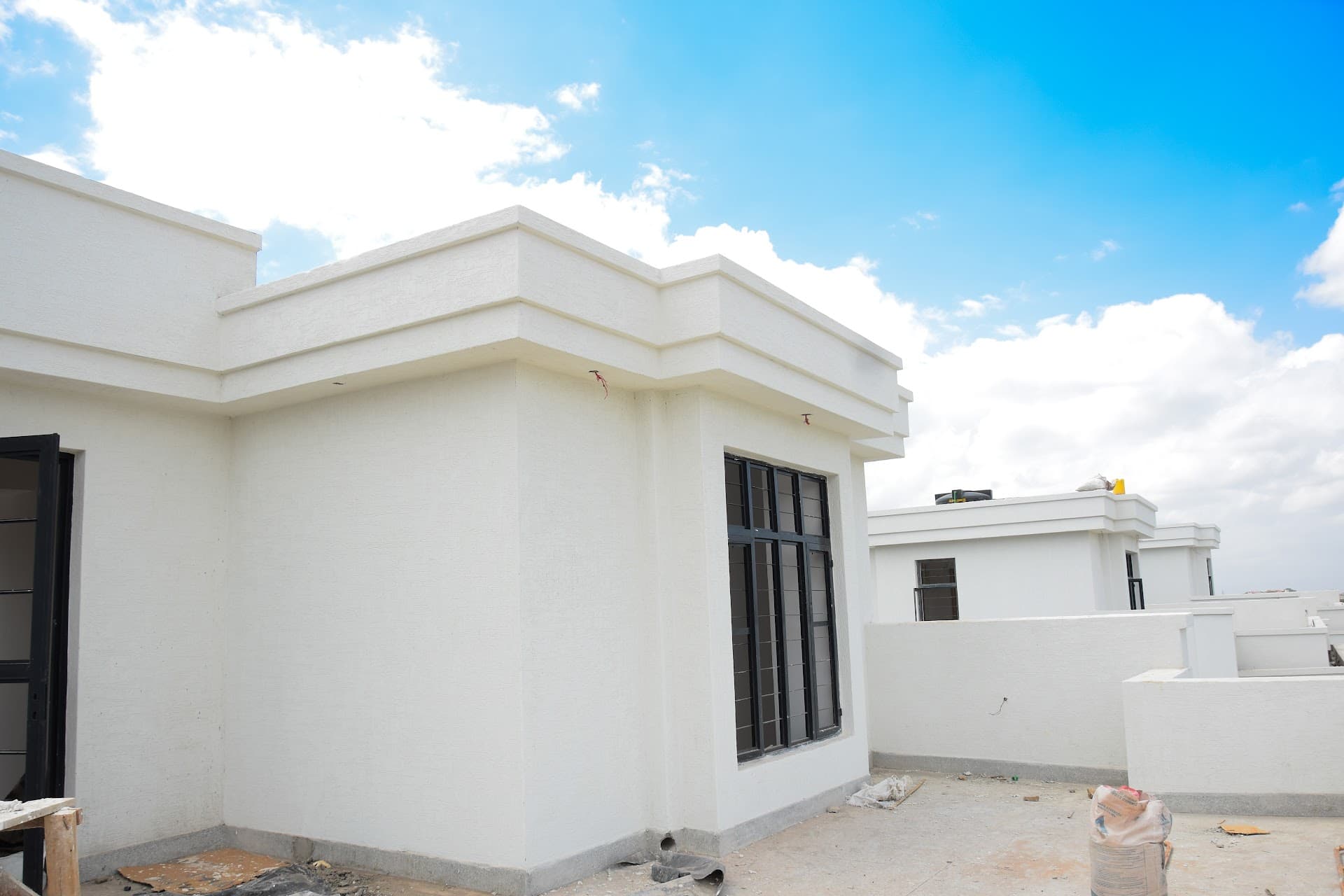
Concrete is inherently porous and develops thermal expansion micro-cracks under Kenya's intense equatorial sun. During heavy downpours, water collects in low spots (ponding). If the roof lacks an engineered fall of at least 1:80 (1.25% slope) toward drainage scuppers, stagnant water exploits hairline fractures, saturating the slab and corroding structural steel reinforcement bars.
1. Technical Comparison: Torch-On Membrane vs Liquid Applied Systems
| Specification Metric | 4mm APP Torch-On Bitumen Membrane | Fiber-Reinforced Polyurethane Liquid |
|---|---|---|
| Material Thickness | 4.0mm calibrated uniform thickness | 1.5mm – 2.0mm (multi-coat wet film) |
| Seams & Joints | 100mm heat-welded overlap seams | 100% Monolithic jointless seamless liquid |
| Ponding Water Resistance | Superior (Withstands standing water) | Moderate (Requires free-draining slope) |
| UV Protection Layer | Mineral slate flakes or reflective paint | Integrated aliphatic UV-blockers (Albedo effect) |
| Cost per m² (Material + Labor) | KES 1,400 – KES 2,200 / m² | KES 950 – KES 1,600 / m² |
| Service Lifespan in Kenya | 15 – 20 Years | 8 – 12 Years (Re-coatable) |
2. The Crucial Parapet Flashing & Angle Fillet Detail
Over 75% of flat roof leaks occur where the horizontal slab meets vertical parapet walls. Water penetrates the 90-degree corner. At Sambright, our waterproofing crews cast a 50mm × 50mm polymer mortar angle fillet (chamfer) along every parapet junction and dress the waterproofing membrane at least 300mm vertically up the wall, tucking it into a chased mechanical reglet sealed with polyurethane mastic.
3. Flood Testing Protocol: Demanding Proof Before Acceptance
A reputable waterproofing contractor never considers a roof finished without an audited flood test. Outlets and scuppers are sealed with mechanical test plugs, and the roof is submerged beneath 50mm of water for 48 hours. Inspectors survey the underside ceiling slab with high-sensitivity thermal imaging cameras and electronic pin meters to verify 100% dry containment.
Frequently Asked Questions on Roof Waterproofing
Can you install torch-on membrane over an existing leaking roof?
Yes, provided loose debris, algae, and failed loose coatings are completely stripped. The concrete substrate must be primed with bituminous primer before torch-welding the fresh 4mm membrane.
What is a flood test and why is it mandatory?
A flood test involves plugging all roof drainage outlets and filling the roof with 50mm of standing water for 24 to 48 hours. This rigorously tests every weld, lap, and flashing point for leaks before applying any protective screed or tiles.
Does flat roof waterproofing reduce heat inside the top floor?
Yes! By applying a white solar-reflective elastomeric topcoat (with a Solar Reflectance Index SRI > 100) over the waterproofing membrane, solar heat absorption into the concrete slab is reduced by up to 80%, lowering top-floor indoor temperatures by 4°C to 7°C.
Need This Exact Quality For Your Space?
Avoid costly contractor mistakes and cheap materials that fail within months. Speak directly with our lead supervisor for honest pricing in KSh and book a free on-site survey anywhere in Nairobi or Kiambu.

Related Master Guides